
Last updated September 24, 2026
Free written scope consultation - allowances, timeline, and change-order rules on paper before a single trade is scheduled
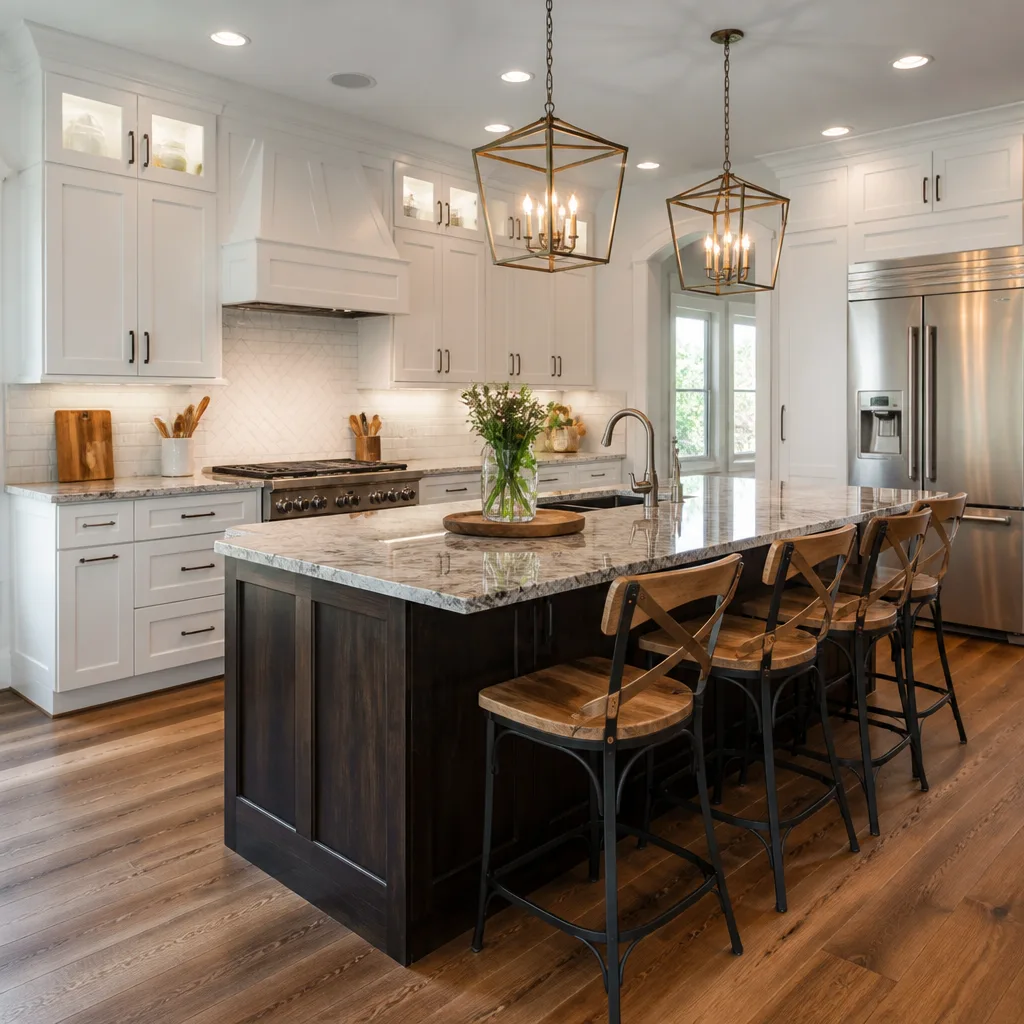
 Before
 After
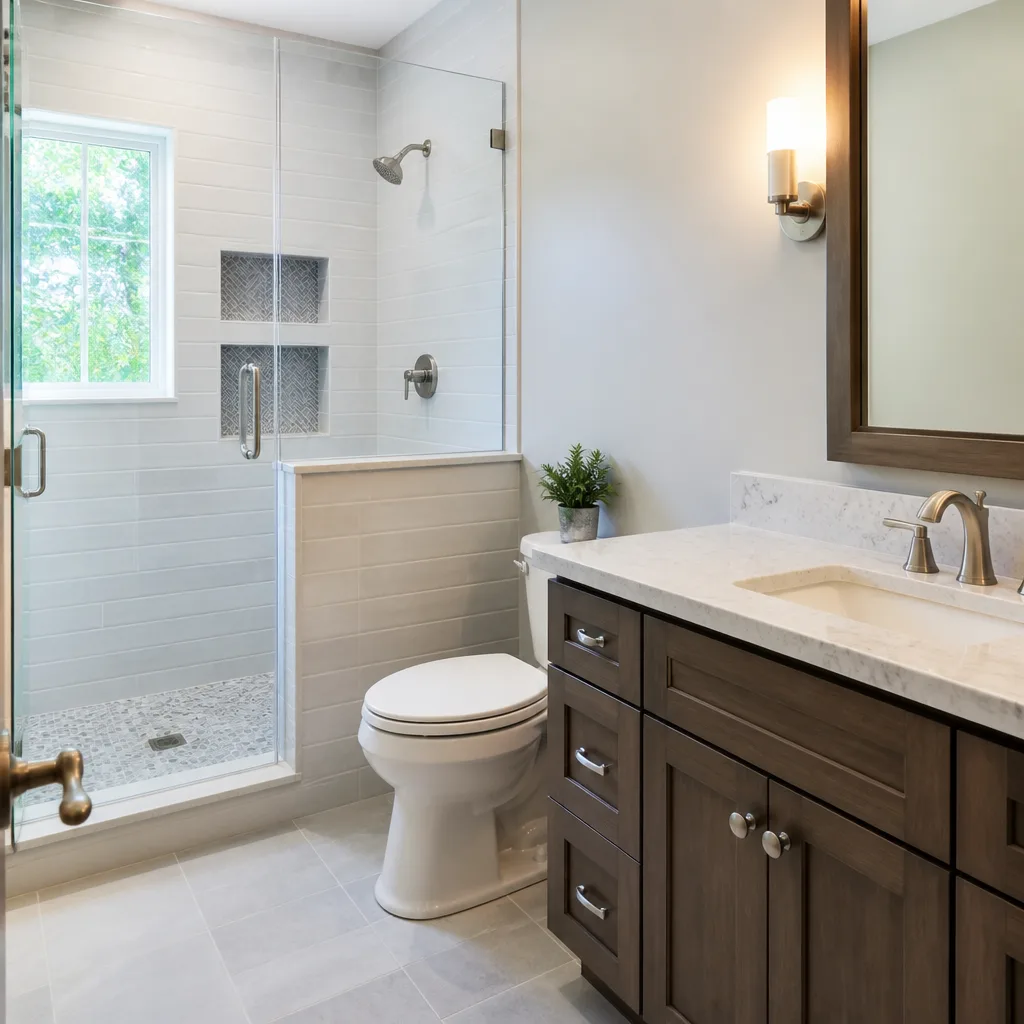
After Before
 After
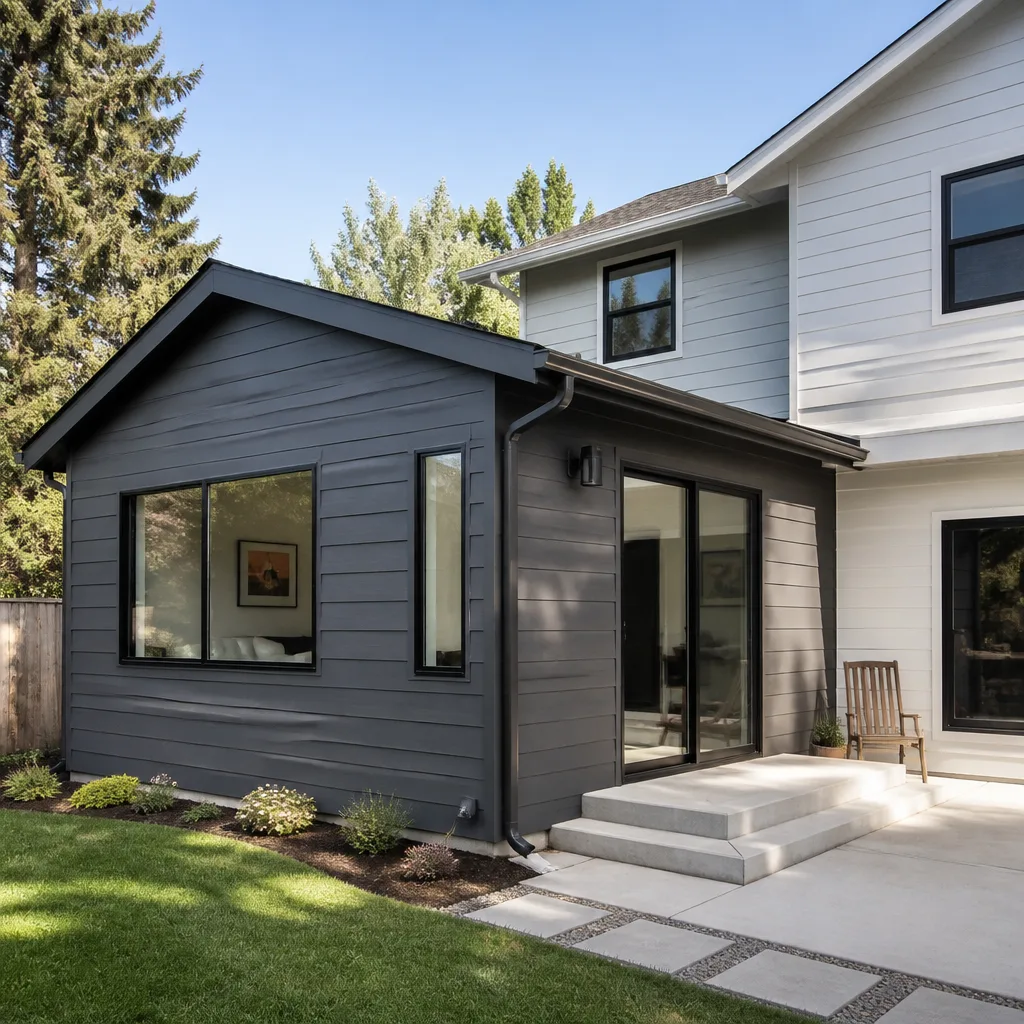
After Before
 After
AfterConstruction Cost Breakdown: The Walnut Creek Homeowner’s Reference for 2026
When a contractor gives you a single number for a remodel, they’ve combined material costs (which you could price at a supply house), labor rates (which vary by trade), permit fees (which are fixed by the city), and their margin (which is negotiable). A single number hides all four. In Walnut Creek, where median home values have pushed past $1.3 million and every square foot of finished space carries a premium, that hidden detail can cost a homeowner $15,000 to $40,000 in unplanned change orders. This guide and our more guides & resources break construction costs into their actual components - labor by trade, materials by category, permit fees, and overhead - so that a Walnut Creek homeowner can read a bid line by line rather than judge it by the total.
Quick Answer
A complete construction cost breakdown for a Walnut Creek project in 2026 includes four fixed categories: trade labor (typically 35-45% of total), materials (30-40%), permits and fees (5-10%), and contractor overhead plus margin (15-20%). For a kitchen remodel, that means roughly $85-$140 per hour for electrical work, $95-$155 for plumbing, and $55-$85 for drywall - plus materials sourced through Ferguson, Ganahl Lumber, or Floor & Decor at prices you can verify yourself. City of Walnut Creek permit fees add roughly $1,200-$4,500 depending on project scope, with ADUs triggering additional school fees from Contra Costa County.
Table of Contents
- Walnut Creek Labor Rates by Trade for 2026
- Material Cost Benchmarks from Named Suppliers
- Permit and Fee Structure: City of Walnut Creek and Contra Costa County
- What Contractor Overhead and Margin Actually Cover
- The Allowance Trap: How Low Bids Hide Real Costs
- Cost Breakdowns by Project Type
- How to Read a Bid Line by Line
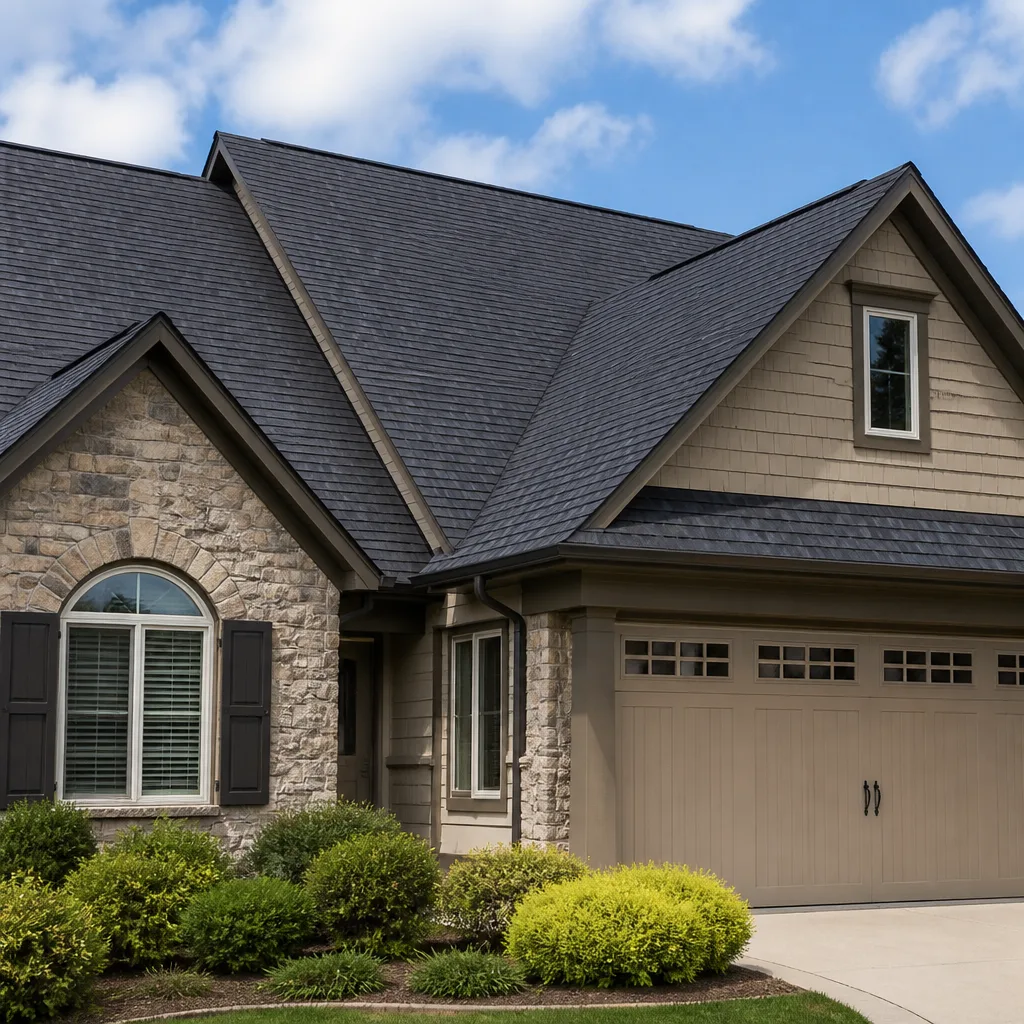
 Before
 After
AfterWalnut Creek Labor Rates by Trade for 2026
Labor is the largest single component of most construction projects, and it’s also the most variable. Rates in Walnut Creek run 15-25% above the national median because of the Bay Area cost of living, union scale influence in Contra Costa County, and the concentration of high-end residential work. We’ve tracked these rates across our projects in neighborhoods from Rowan Construction Group Walnut Creek home work in Larkey Valley to the Broadway Plaza corridor.
Here are the hourly ranges we see on bids and pay to subcontractors in 2026, with typical hours per project phase:
| Trade | Hourly Rate Range | Typical Hours (Kitchen Remodel) | Typical Hours (Bath Remodel) |
|---|---|---|---|
| Framing / rough carpentry | $65 - $95 | 40 - 80 | 16 - 32 |
| Electrical | $85 - $140 | 32 - 64 | 16 - 40 |
| Plumbing | $95 - $155 | 24 - 48 | 16 - 32 |
| HVAC (duct modification) | $90 - $145 | 16 - 32 | 8 - 16 |
| Tile setting | $55 - $85 | 32 - 64 | 24 - 48 |
| Drywall / plaster | $55 - $85 | 40 - 80 | 24 - 48 |
| Finish carpentry | $70 - $110 | 24 - 48 | 16 - 32 |
| Painting (prep + finish) | $45 - $70 | 40 - 80 | 24 - 40 |
| Roofer (tear-off + install) | $65 - $100 | N/A | N/A |
These are billable rates, not take-home wages. They include the subcontractor’s own overhead: vehicle, tools, insurance, and small crew. A homeowner who tries to hire these trades directly will often pay within 10% of the same numbers once they factor in coordination time, callback risk, and the markup a general contractor absorbs for scheduling conflicts.
In Walnut Creek specifically, we’ve noticed electrical rates pushing toward the high end of these ranges in the hillside zones - Parkmead, Sugarloaf, and the Las Trampas slopes - where older 100-amp services require more complex upgrades to handle modern kitchen loads. The 2023 NEC adoption in California, with its AFCI and GFCI expansion, added roughly 4-8 hours to most kitchen rewires. That’s not padding; it’s code compliance that shows up in every legitimate bid.
Material Cost Benchmarks from Named Suppliers
Materials are the component a homeowner can most easily verify independently. We source through Ferguson for plumbing fixtures, Ganahl Lumber for framing and finish materials, and Floor & Decor for tile and stone - and we write those supplier names into our quotes so customers can check shelf pricing themselves. Here’s what those benchmarks look like in 2026 for the most common project types in Walnut Creek.
Kitchen Remodeling Materials
For a typical 200-square-foot kitchen in a Walnut Creek ranch or two-story built between 1960 and 1990:
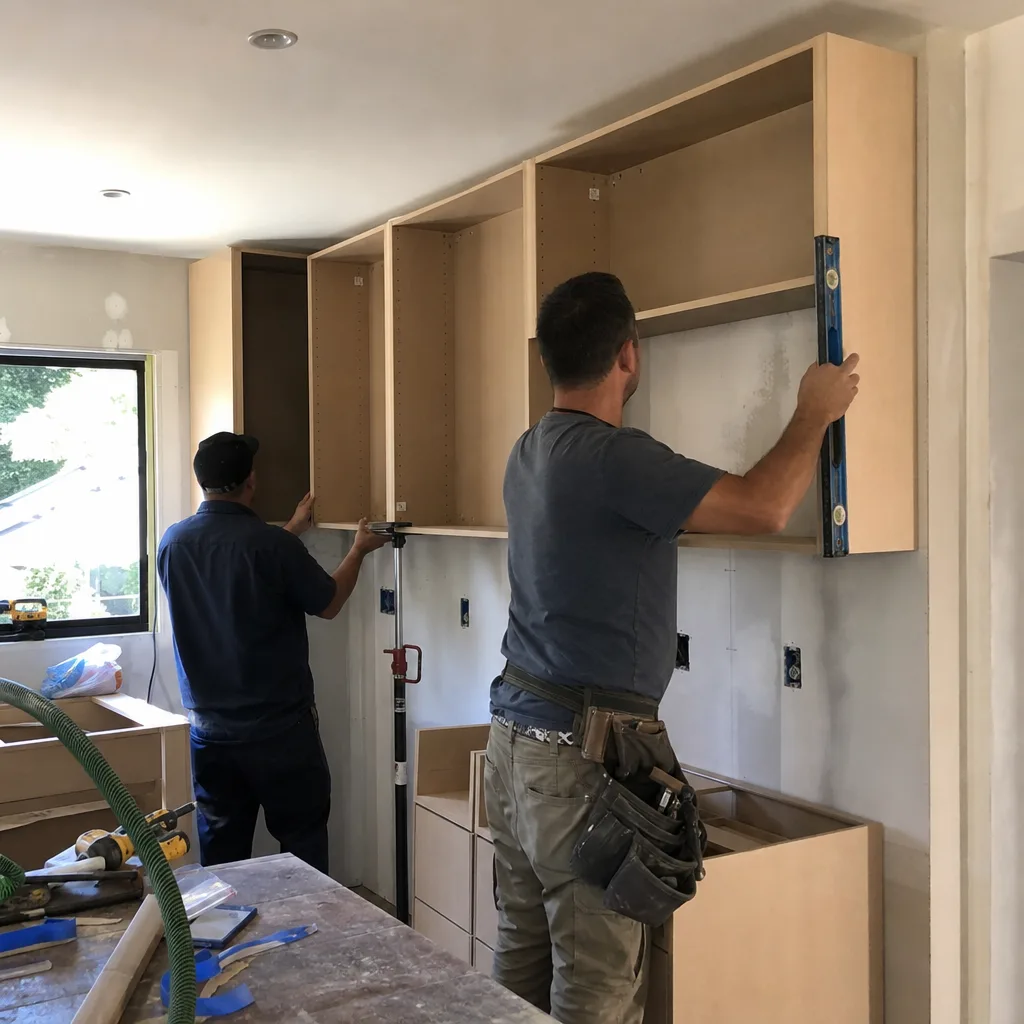
- Cabinetry (KraftMaid or Wellborn, semi-custom): $18,000-$35,000 for full replacement with soft-close drawers, plywood boxes, and painted or stained finish. Stock boxes from big-box retailers run 30-40% less but require more field modification for Walnut Creek’s common 8-foot ceilings and non-standard soffits.
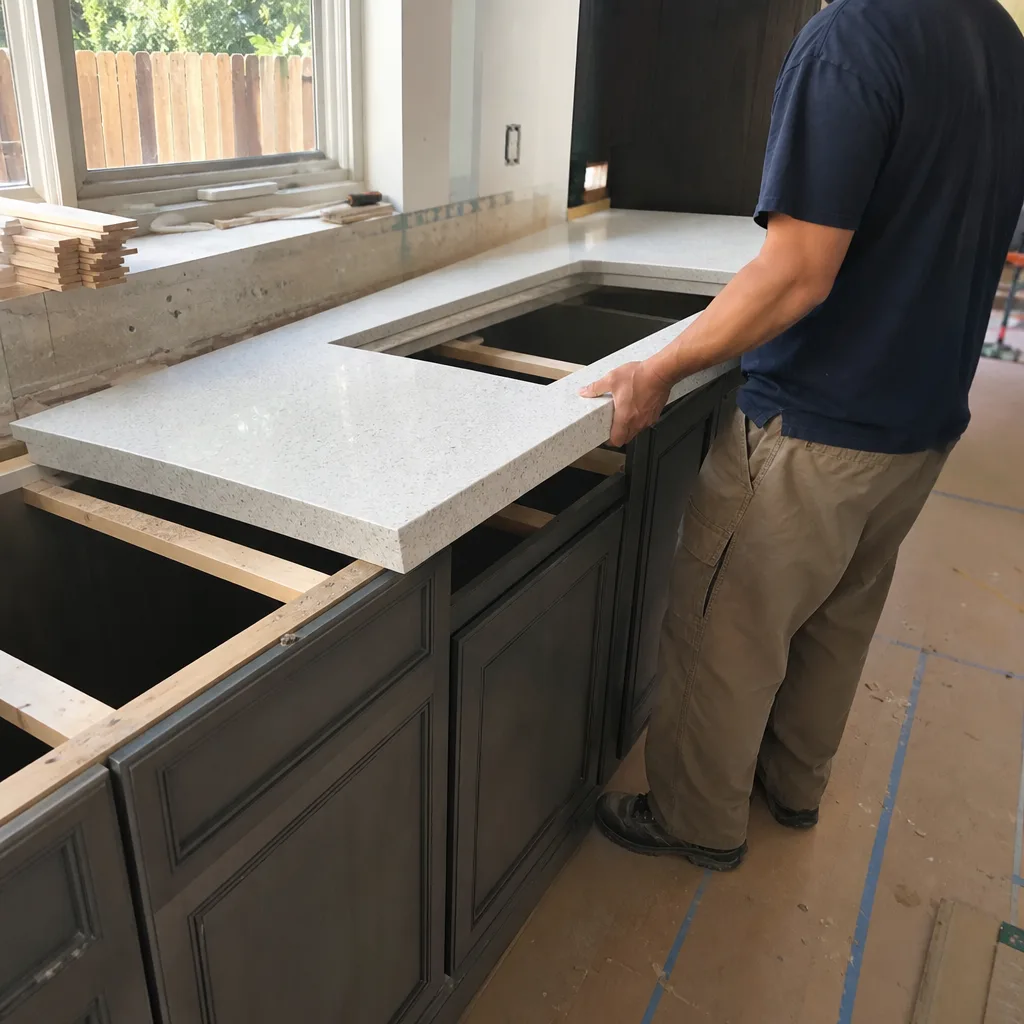
- Countertops (Cambria or Caesarstone, quartz): $75-$125 per square foot installed, including templating and sink cutout. A 40-square-foot kitchen with island runs $4,500-$7,500. Natural stone (marble, granite) from local yards ranges wider - $60-$200 - but quartz has dominated our Walnut Creek projects since 2019 for its consistency and lower maintenance.
- Appliances (mid-grade, named brands): $8,000-$18,000 for refrigerator, range, dishwasher, microwave, and ventilation. We don’t markup appliances; we direct customers to Ferguson or their preferred retailer and coordinate delivery.
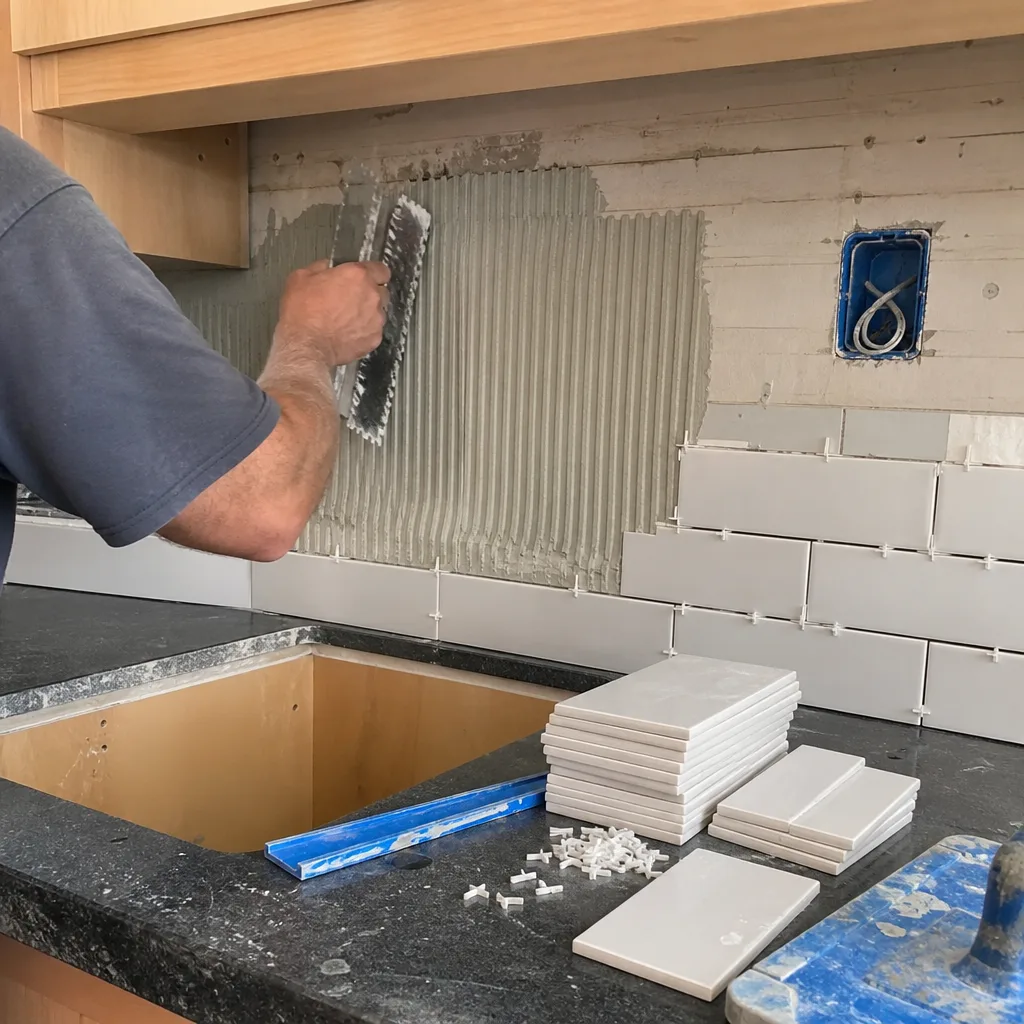
- Tile backsplash: $8-$35 per square foot material, with installation labor at $55-$85 per hour. A typical 30-square-foot backsplash runs $900-$2,800 total.
- Plumbing fixtures (Kohler, Toto, or equivalent): $1,200-$3,500 for sink, faucet, and disposal.
Total material package for a mid-range Kitchen Remodeling in Walnut Creek: $32,000-$65,000 before labor, permits, or contractor margin.
Bathroom Remodeling Materials
For a typical 50-square-foot hall bath or 80-100 square foot primary bath:
- Vanity and countertop: $1,200-$4,500 depending on custom vs. semi-custom and stone selection.
- Shower/tub surround (tile or solid surface): $2,500-$8,000 material, with porcelain and ceramic at the low end and large-format stone-look porcelain or natural stone at the high end.
- Fixtures (Kohler, Toto, or equivalent): $800-$2,500 for toilet, vanity faucet, shower valve, trim, and accessories.
- Tile flooring: $3-$12 per square foot material, with waterproofing membrane (Schluter Kerdi or equivalent) adding $4-$6 per square foot.
Total material package for a mid-range Bathroom Remodeling in Walnut Creek: $6,500-$18,000.
Roofing Materials
For a typical 2,000-square-foot Walnut Creek home with moderate pitch:
- Asphalt shingles (GAF Timberline HDZ or Owens Corning Duration): $4.50-$7.50 per square foot installed, including tear-off, underlayment, and flashing. Material-only at Ganahl Lumber runs roughly $140-$220 per square (100 square feet).
- Concrete tile (Eagle or equivalent): $8-$14 per square foot installed. Heavier, requires structural verification for older Walnut Creek homes built with lighter truss spacing.
- Composition underlayment, ice/water shield, and ventilation: $1,200-$2,800 material for full replacement.
Our Roofing in Walnut Creek projects consistently show that material selection drives total cost more than labor - the tear-off and installation hours are similar across shingle types, but the product cost doubles or triples.
ADU and Home Addition Materials
For a 400-square-foot detached ADU or 500-square-foot attached addition:
- Framing lumber and sheathing (Ganahl Lumber, #2 Doug fir): $8,000-$15,000 for a 400-square-foot structure with 10-foot walls.
- Windows and doors (vinyl or fiberglass, dual-pane, Title 24 compliant): $6,000-$14,000 depending on opening count and size.
- Insulation (R-21 walls, R-38 ceiling, mineral wool or fiberglass): $2,500-$5,000.
- Drywall and finish: $3,500-$7,000.
- Flooring (LVP, tile, or engineered wood): $4,000-$10,000.
Permit and Fee Structure: City of Walnut Creek and Contra Costa County
Permit fees are fixed costs that every legitimate contractor passes through directly. For details, see our guide to Construction Permits, Codes & Inspections in CA: What You Need to Know. They don’t vary by bid; they vary by project scope and jurisdiction. In Walnut Creek, this means City of Walnut Creek building permits for work within city limits, plus Contra Costa County requirements for unincorporated areas like the Tice Valley corridor and certain hillside parcels.
Here’s the 2025-2026 fee structure we see on every project:
City of Walnut Creek Building Permits
| Project Type | Plan Check Fee | Permit Fee (Valuation-Based) | Inspection Fees | Total Typical Range |
|---|---|---|---|---|
| Kitchen remodel (no structural) | $450 - $850 | $800 - $1,800 | $300 - $500 | $1,550 - $3,150 |
| Bathroom remodel (no structural) | $350 - $650 | $600 - $1,400 | $250 - $400 | $1,200 - $2,450 |
| Full roof replacement | $300 - $550 | $500 - $1,200 | $200 - $350 | $1,000 - $2,100 |
| Home addition (500 sq ft) | $1,200 - $2,500 | $2,500 - $5,500 | $600 - $1,000 | $4,300 - $9,000 |
| Detached ADU (400 sq ft) | $1,500 - $3,000 | $3,000 - $6,500 | $800 - $1,400 | $5,300 - $10,900 |
Valuation-based permit fees are calculated from the estimated construction value. The City of Walnut Creek uses ICC valuation tables, but they also accept contractor-provided estimates for residential work. We’ve found that accurate valuation submission - not lowballing - prevents delays. An inspector who finds finishes or scope beyond the permit valuation can red-tag the job and require a permit amendment.
Contra Costa County and State Fees
- School fees (ADUs only): Contra Costa County charges school impact fees on detached ADUs exceeding certain square footage thresholds. As of 2025, this runs $3.48-$4.20 per square foot of habitable space, or roughly $1,400-$1,700 for a 400-square-foot ADU. Attached ADUs under 750 square feet are exempt under state law, but the exemption must be claimed at permit application.
- Title 24 energy compliance documentation: Required for all additions and ADUs, typically $400-$800 for a HERS rater or energy consultant to produce the CF-1R forms. We include this in our fixed-price quotes; some contractors treat it as a surprise add-on.
- Fire sprinkler requirements: New construction in Walnut Creek’s wildland-urban interface zones - including portions of Parkmead, Sugarloaf, and all properties east of Interstate 680 with WUI designation - may require NFPA 13D residential sprinkler systems. Material and installation adds $4,000-$7,500 to an ADU or addition.
The WUI designation is a critical Walnut Creek-specific factor. Properties in State Responsibility Areas or Local Responsibility Areas with very high fire severity zones trigger additional Cal Fire review and sometimes enhanced construction standards. We’ve seen projects delayed six weeks because a contractor didn’t identify WUI status at the permit application stage. Under Clause 1 of the Haven Standard, we pull permits and verify jurisdiction before quoting; the fee is written, not discovered.
What Contractor Overhead and Margin Actually Cover
A 15-20% general contractor markup is standard in the Bay Area. Below 15%, a contractor is either absorbing costs that will reappear as change orders, or operating without adequate insurance and warranty reserves. Above 25% on a straightforward project, the homeowner should ask for line-item justification.
Here’s what that percentage actually pays for:
- General liability and workers compensation insurance: For a seven-trade contractor in California, this runs 8-12% of payroll. On a $100,000 project with $45,000 in labor, that’s $3,600-$5,400 in direct premium cost.
- License bond and contractor bond: Required by CSLB, currently $25,000 license bond plus any additional bonding for public works. Annual cost spread across projects: roughly 0.5-1% of revenue.
- Supervision and project management: A dedicated superintendent or project manager costs $85,000-$140,000 annually in the Bay Area. Spread across 20-30 projects, that’s $3,000-$7,000 per job depending on duration and complexity.
- Warranty reserve: The 365-Day Done Right Promise requires funding. We reserve 2-3% of project value for callback coverage - not a profit center, but a cost of standing behind the work.
- Office, scheduling, and documentation: Live call answering, photo record storage, change order processing, and accounting. This runs 3-5% of revenue for a contractor with documented systems.
- Profit: A sustainable contractor needs 3-5% net profit to reinvest in training, equipment, and retention. Below that, turnover rises and quality falls.
Add these line items and a 17% markup on a $100,000 job covers actual costs with roughly 4% net margin. A contractor quoting 10% is either underinsured, unsupervised, or planning to recover through change orders.
In Walnut Creek’s competitive market, we’ve reviewed competitor bids through our Free Second Opinion service that showed 12% markup with no line-item for permit expediting or project management. Those projects finished 18-30% over the original total. The low markup was a positioning tactic, not a sustainable price.
The Allowance Trap: How Low Bids Hide Real Costs
The most common mechanism for bid manipulation, as covered in our Construction Warning Signs: A Walnut Creek Homeowner’s Reference Guide, is the allowance - a placeholder dollar amount for finishes the homeowner will select later. A $500 tile allowance in a primary bathroom bid sounds reasonable until the homeowner discovers that the tile they want costs $2,200. The $1,700 difference becomes a change order, often with additional markup.
Here’s how to convert an allowance-based bid into a fixed-price comparison:
- Request the allowance schedule in writing. Every allowance should specify the quantity (square footage, linear footage, count) and the assumed grade. “Tile: $500” is meaningless. “Tile, shower walls and floor, 85 sq ft, $5.88/sq ft, ceramic, white” is verifiable.
- Price the actual selections before signing. Visit Floor & Decor, Ferguson, or your preferred supplier with the allowance quantities. Note the material cost, then add 10-15% for contractor markup (standard on materials) and freight.
- Calculate the true delta. If your selections run $2,200 and the allowance was $500, your project just increased $1,700 plus markup - call it $1,900. Add that to the bid total for accurate comparison.
- Request fixed-price alternatives. We quote with specified materials or with a “good-better-best” tier structure. Each tier locks the price. The customer knows the maximum before work starts, and any upgrade requires a signed change order under Clause 1.
We’ve seen this trap most often in Walnut Creek’s 1980s and 1990s subdivisions - Rancho San Miguel, Walnut Heights, and the Ygnacio Valley corridor - where original bathrooms have standard 4×4 white tile and cultured marble vanities. Replacement with modern large-format porcelain and quartz countertops routinely runs 3-4× the allowance in low bids.
The documented photo record we provide on every visit helps here. Our pre-construction photos show existing conditions; the allowance worksheet shows assumed conditions; and any discrepancy is resolved before the contract is signed, not after demolition reveals galvanized plumbing or subfloor rot.
Cost Breakdowns by Project Type
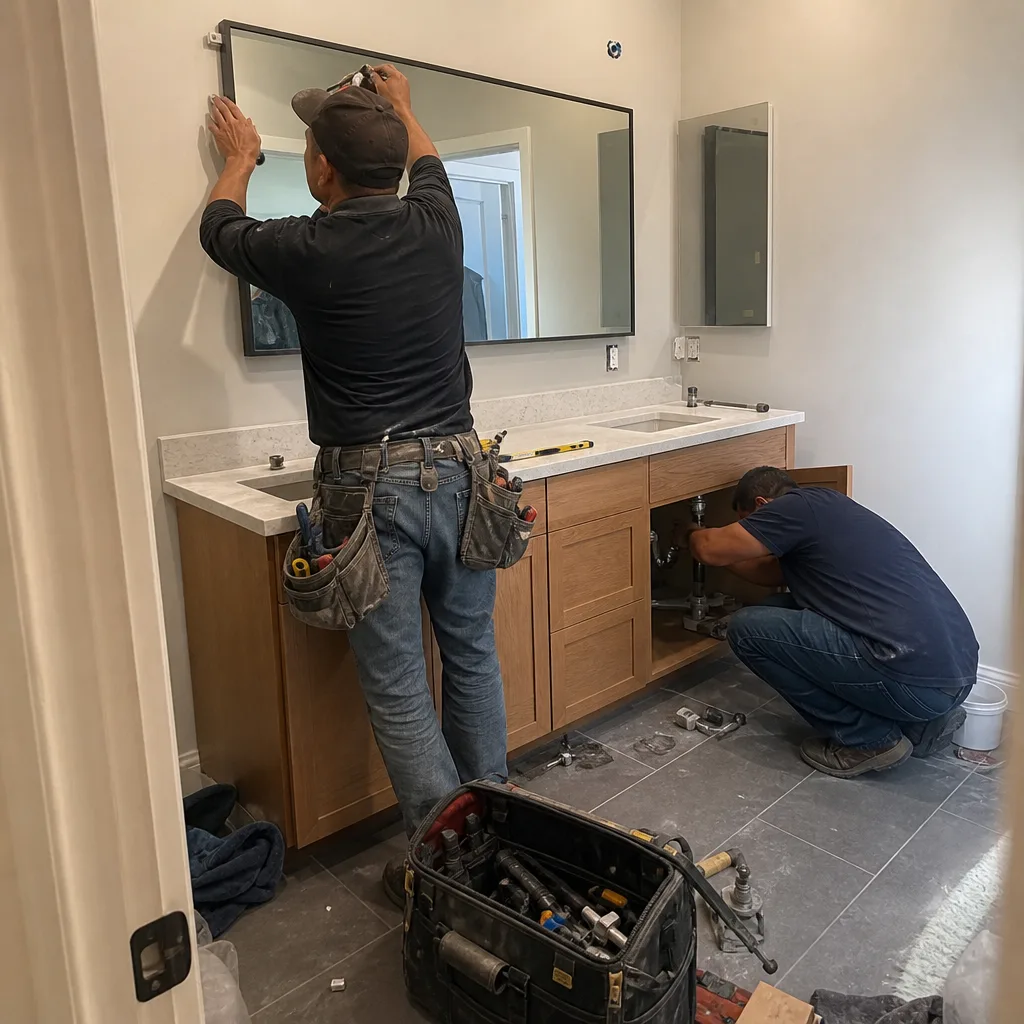
Putting the components together, here are representative breakdowns for common Walnut Creek projects in 2026. These are ranges, not quotes; every project varies by existing conditions, access, and finish selection.
Kitchen Remodel: 200 Square Feet, Mid-Range Finish
| Category | Low Range | High Range |
|---|---|---|
| Labor (all trades, 320-480 hours) | $28,000 | $48,000 |
| Materials (cabinets, counters, tile, fixtures, appliances) | $32,000 | $65,000 |
| Permits and fees (City of Walnut Creek) | $1,550 | $3,150 |
| Contractor overhead and margin (17%) | $10,800 | $19,700 |
| Total | $72,350 | $135,850 |
Notes: Appliance pricing is direct-to-consumer; we coordinate delivery and connection. Structural modifications (removing walls, beam installation) add $8,000-$25,000 depending on engineering and permit complexity.
Primary Bathroom: 80 Square Feet, Full Gut
| Category | Low Range | High Range |
|---|---|---|
| Labor (all trades, 160-280 hours) | $14,000 | $26,000 |
| Materials (vanity, counter, tile, fixtures, glass enclosure) | $8,500 | $22,000 |
| Permits and fees | $1,200 | $2,450 |
| Contractor overhead and margin (17%) | $4,000 | $8,600 |
| Total | $27,700 | $59,050 |
Detached ADU: 400 Square Feet, Studio Configuration
| Category | Low Range | High Range |
|---|---|---|
| Labor (all trades, 600-900 hours) | $48,000 | $85,000 |
| Materials (framing, finishes, fixtures, systems) | $35,000 | $62,000 |
| Permits, fees, and school impact | $5,300 | $12,600 |
| Utility connection and site work | $8,000 | $18,000 |
| Contractor overhead and margin (17%) | $16,000 | $30,000 |
| Total | $112,300 | $207,600 |
ADU costs in Walnut Creek are particularly sensitive to site conditions. Hillside lots require retaining walls or engineered foundations; flat lots near downtown or the BART corridor may need only minimal grading. We’ve built ADUs in the Lakewood area on flat, well-drained sites that came in at the low end, and hillside units in Parkmead that required $25,000 in foundation work before framing began.
How to Read a Bid Line by Line
A legitimate bid is a document you can audit. Here’s the structure we use on every Rowan Construction Group Walnut Creek home project, and what to verify in any competitor’s quote:
- Scope narrative: What exactly is included? “Remodel kitchen” is insufficient. “Remove existing cabinets, countertops, and appliances; modify plumbing and electrical for new layout; install specified cabinets, countertops, backsplash, and appliances; paint walls and ceiling” is auditable.
- Exclusions: What is explicitly not included? Common exclusions: appliance purchase, window replacement, structural engineering, asbestos or lead abatement, and landscaping repair. Every exclusion is a potential future cost.
- Allowance schedule: Quantities, grades, and sources for every selection item. Missing quantities mean the contractor can claim you selected “more than standard.”
- Payment schedule: California law limits upfront payment to 10% or $1,000, whichever is less, for home improvement contracts. Progress payments tied to inspection milestones are standard. A demand for 50% upfront is a red flag.
- Change order procedure: How are changes priced and approved? Under the Haven Standard, no work proceeds on a change until the change order is signed. The bid should state this explicitly.
- Warranty terms: Duration, coverage, and process. Our 365-Day Done Right Promise is printed on every page and backed by a terms page, not an asterisk.
- License and insurance verification: CSLB license number, general liability certificate, and workers compensation declaration. We put our license number on every proposal; any contractor who hesitates to provide this documentation should not be hired.
When we provide a Free Second Opinion on a competitor’s written estimate, we review these seven elements line by line with the homeowner. In 2024, we reviewed 34 competitor bids for Walnut Creek homeowners. Twelve had no allowance quantities. Eight had no written change order procedure. Four had payment schedules violating California law. These aren’t minor formatting issues; they’re structural deficiencies that predict cost overruns.
Common Mistakes to Avoid
- Comparing only total price, not component breakdown. A $75,000 kitchen bid with $18,000 in allowances and a $95,000 fixed-price bid are not comparable until you price the actual selections. The fixed-price bid may be lower in reality.
- Ignoring permit fees in early budgeting. Walnut Creek homeowners sometimes budget $60,000 for a kitchen and forget that permits, Title 24 documentation, and potential WUI requirements add $2,000-$5,000 before construction begins.
- Assuming all contractors carry adequate insurance. Verify the certificate directly with the insurance carrier. We’ve seen expired policies and inadequate coverage on competitor documentation.
- Accepting verbal promises for price protection. “We’ll work with you on changes” means nothing without a signed change order process. Every cost increase should require mutual written agreement.
- Neglecting the hillside factor. Walnut Creek’s topography affects foundation work, drainage, access for material delivery, and even roofing safety requirements. A bid that doesn’t mention site conditions hasn’t been thought through.
- Choosing lowest bid without checking allowance realism. The lowest bid often has the lowest allowances, creating the largest gap between signed price and final invoice.
- Failing to request the documented photo record. Visual evidence of existing conditions protects both parties from disputes about pre-existing damage or scope changes.
When to Call a Professional
Call a contractor when the project involves multiple trades, permit requirements, or structural modifications - which describes most kitchen remodels, bathroom remodels, additions, and ADUs in Walnut Creek. See our DIY vs Professional Construction: The Walnut Creek Homeowner’s Decision Guide for help deciding. The cost of professional coordination is recovered through accurate pricing, code compliance, and warranty protection.
Call specifically when:
- You’re comparing bids and can’t reconcile the totals
- A bid uses allowances without specified quantities or grades
- Your property is in a WUI zone or hillside area with access constraints
- You’re considering an ADU and need to navigate school fees, utility connections, and setback requirements
- You have a competitor’s written estimate and want a line-by-line second opinion
Rowan Construction Group Walnut Creek offers free estimates in Walnut Creek - call (510) 686-6370. Every estimate includes a written price before any work starts, a documented photo record of existing conditions, and reference to the Haven Standard clauses that govern our work.
Frequently Asked Questions
A mid-range kitchen remodel in Walnut Creek costs roughly $360-$680 per square foot when all components - labor, materials, permits, and contractor margin - are included. That range collapses to meaningless precision without specifying cabinet grade, appliance package, and structural modifications. Call (510) 686-6370 for a written estimate with line-item breakdown - estimates are free.
The price does not change for the scope specified in the written contract. Under Clause 1 of the Haven Standard, no work proceeds on a change until the change order is signed. If we discover hidden conditions - rotted subfloor, outdated wiring, asbestos - we document with photos, explain the finding, and present a signed change order before any additional work begins. Call (510) 686-6370 to discuss how we handle specific risk scenarios in your project.
We pull all permits as part of our standard service. The permit is issued in the homeowner’s name with Rowan Construction Group listed as the contractor of record. You receive copies of all permits, inspection records, and final approval documentation. This is included in our overhead, not billed separately. Call (510) 686-6370 to confirm permit handling for your specific project type.
From permit application to final inspection, a kitchen remodel takes 10-16 weeks. Demolition through rough inspection is 3-5 weeks; finish work is 4-8 weeks; and permit processing, material lead times, and inspection scheduling fill the remainder. Custom cabinets from KraftMaid or Wellborn currently run 8-12 weeks from order to delivery, which often drives the overall schedule. Call (510) 686-6370 for a timeline specific to your selections and season.
Contra Costa County charges school impact fees on detached ADUs at roughly $3.48-$4.20 per square foot of habitable space, or about $1,400-$1,700 for a 400-square-foot unit. Attached ADUs under 750 square feet are exempt under state law if claimed at permit application. This fee is separate from City of Walnut Creek building permits and plan check fees. Call (510) 686-6370 for current rates and exemption verification.
Check the Cal Fire Fire Hazard Severity Zone map and the City of Walnut Creek WUI designation. Properties east of Interstate 680, in Parkmead, Sugarloaf, and Las Trampas-adjacent areas, often carry WUI status requiring enhanced construction standards and potentially residential fire sprinklers for new construction. We verify WUI status during our pre-estimate site visit and include any requirements in the written quote. Call (510) 686-6370 to schedule.
The Bottom Line
A construction cost breakdown isn’t an academic exercise - it’s the tool that lets you compare bids honestly, budget accurately, and avoid the change-order spiral that turns a $75,000 kitchen into a $95,000 surprise. In Walnut Creek’s high-value market, where every dollar of construction cost is multiplied in home equity, that transparency matters more than in most places.
The four components - labor by trade, materials by supplier, permits by jurisdiction, and overhead by justification - are knowable before you sign. A contractor who won’t break them out is a contractor who doesn’t want you to verify. At Rowan Construction Group, we’ve written every price before starting work since 2007, across 4,000-plus projects, because Clause 1 of the Haven Standard is the whole point.
Written by Grant Rowan, Owner at Rowan Construction Group Walnut Creek, serving Walnut Creek since 2007.