
Last updated September 24, 2026
Free written scope consultation - allowances, timeline, and change-order rules on paper before a single trade is scheduled







 Before
 After
After Before
 After
After Before
 After
AfterKitchen Remodeling Maintenance Checklist for Walnut Creek Homeowners
Epoxy grout, the material we specify in most Walnut Creek kitchen remodels because it resists the red wine and turmeric stains that ruin cement grout, degrades faster than cement grout when cleaned with vinegar-based products. The cleaning product most homeowners reach for first is the one that shortens grout life by half. This guide is organized by material category, not by calendar month, because a maintenance checklist that treats quartz countertops the same as marble, or epoxy grout the same as sanded grout, gives advice that is wrong half the time. You will learn the exact sealing frequencies, product names, and adjustment procedures for the brands and materials most commonly installed in Walnut Creek kitchens, plus how to document your kitchen so future repairs match exactly.
Quick Answer
A kitchen remodeling maintenance checklist for Walnut Creek homeowners should be organized by material, not by month. Quartz countertops need only soap and water; natural stone needs sealing every 6 to 12 months. Cabinet hinges require annual adjustment screw checks. Range hood filters need cleaning or replacement based on CFM rating. Caulk at sink, window, and backsplash edges should be inspected each spring after thermal expansion from summer heat cycles. Document all materials with photos and a written log at project completion.
Table of Contents

- Countertop Care by Material: Quartz, Natural Stone, and Solid Surface
- Cabinet Maintenance: Hinges, Hardware, and Finish Protection
- Backsplash and Grout: Epoxy vs. Cement, Cleaning Products That Damage
- Ventilation Systems: Hood Filters, Duct Cleaning, and CFM Ratings
- Plumbing Fixtures: Faucet Cartridges, Seals, and Hard Water in Walnut Creek
- Caulk and Sealants: Annual Inspection Points for Thermal Expansion
- Documentation System: Photos, Materials Log, and Future Repair Matching
- Annual Maintenance Schedule: What to Do and When
 Before
 After
AfterCountertop Care by Material: Quartz, Natural Stone, and Solid Surface
The countertop is the work surface that takes the most abuse, and the care protocol depends entirely on what was installed. In Walnut Creek kitchen remodels, we see three categories dominate: engineered quartz, natural stone, and solid surface materials. Each has a different vulnerability, and each responds to the wrong cleaner with permanent damage.
Engineered quartz (Silestone, Caesarstone, MSI Q Premium) is 93% crushed quartz bound with resin. It does not need sealing. Ever. The resin binder is the weak point. Heat above 300°F can discolor or crack the resin, so trivets are mandatory, not optional. For daily cleaning, a drop of dish soap in warm water and a microfiber cloth is sufficient. Avoid abrasive powders, steel wool, and alkaline cleaners with pH above 11. We have replaced Caesarstone slabs in Kitchen Remodeling in Walnut Creek projects where homeowners used oven cleaner to remove a stubborn stain and etched the resin permanently.
Natural stone (marble, granite, soapstone) is porous and requires sealing. The frequency depends on the stone and the sealer used:
- Marble: seal every 3 to 6 months with a penetrating sealer such as StoneTech Bulletproof or Miracle Sealants 511 Impregnator. Marble is calcium carbonate; anything acidic, lemon juice, tomato sauce, vinegar, etches the surface permanently. In Walnut Creek, where homeowners cook with fresh citrus and tomatoes year-round, etching is the most common damage we are called to repair.
- Granite: seal every 12 months. Test by dripping water on the surface; if it darkens the stone in under 10 minutes, reseal immediately. Use a solvent-based penetrating sealer, not a topical coating that will peel.
- Soapstone: does not seal; it oils. Apply mineral oil monthly for the first year, then quarterly. The surface develops a patina that is part of its character.
Solid surface (Corian, Wilsonart, LG Hausys) is repairable but soft. Scratches can be sanded out with 400-grit sandpaper followed by 600-grit, then a polishing compound. Heat damage cannot be repaired; use trivets. Clean with soapy water or ammonia-based cleaners; avoid acetone and strong solvents.
Under Clause 1 of The Haven Standard, the material brand and sealer product are written into your project documentation. If you do not have this record, call the contractor who performed your Kitchen Remodeling in Walnut Creek project, or check the underside of the countertop where fabricators often stamp the slab color and lot number.
Cabinet Maintenance: Hinges, Hardware, and Finish Protection
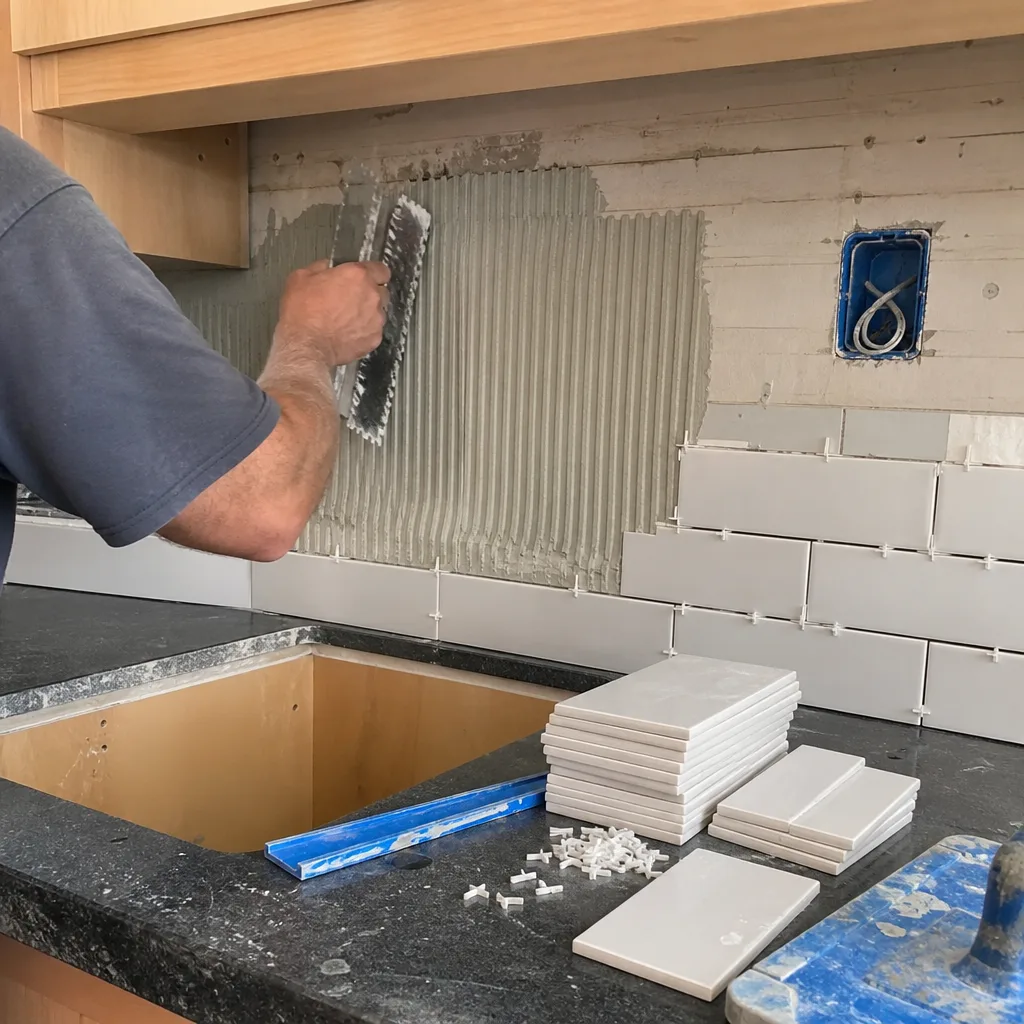
Cabinet doors warp when hinges go out of adjustment. The warp is gradual, often invisible until the door no longer closes flush, and by then the hinge cup has wallowed out the mounting hole. Annual hinge adjustment prevents this. The procedure differs by manufacturer, and the documentation is rarely left with homeowners.
Blum hinges (common on KraftMaid, Wellborn, and custom cabinet lines) have three adjustment screws. The screw closest to the door face adjusts depth (in-out), the middle screw adjusts side-to-side, and the screw nearest the cabinet frame adjusts up-down. Turn each screw no more than one-quarter turn before testing the door close. Over-adjustment strips the screw seat.
Grass hinges (found on European-import and some semi-custom lines) use a cam system. The adjustment is tool-free: press the release lever, reposition the door, and the cam locks. The up-down adjustment is a separate screw on the mounting plate, not the hinge cup.
Soft-close mechanisms fail when hydraulic fluid leaks or the piston binds. A door that slams after years of soft closing needs a replacement hinge cup, not adjustment. Blum and Grass both sell replacement inserts; the part number is stamped on the hinge arm.
Hardware maintenance is simpler. Pulls and knobs loosen as wood expands and contracts through Walnut Creek’s summer heat cycles. Check screw tightness each spring with a screwdriver, not a power driver that can strip the threads. For oil-rubbed bronze or brushed nickel finishes, avoid ammonia-based cleaners that strip the lacquer topcoat. A damp cloth with a drop of mild soap is sufficient.
Cabinet finish protection means controlling moisture and light. The finish film (conversion varnish on premium lines, lacquer on standard) degrades with UV exposure. If your kitchen receives direct afternoon sun, as many Rowan Construction Group Walnut Creek home projects in the Rossmoor and Saranap areas do, consider solar film on windows or rotate items on open shelves to prevent uneven fading.
Backsplash and Grout: Epoxy vs. Cement, Cleaning Products That Damage
The backsplash is the most visible vertical surface in a kitchen, and grout is the maintenance item most homeowners get wrong. The error is usually the cleaner, not the frequency.
Epoxy grout (Laticrete SpectraLOCK, Mapei Kerapoxy) is increasingly specified in Walnut Creek kitchen remodels because it resists staining from turmeric, wine, and tomato sauce. The resin binder is impervious to water and most stains, but it is vulnerable to acids and abrasives. Vinegar, lemon juice, and acidic bathroom cleaners degrade the epoxy matrix, causing surface chalking and eventual cracking. Clean with pH-neutral cleaners such as Miracle Sealants Epoxy Grout Film Remover for initial haze removal, then daily maintenance with warm water and a soft sponge.
Cement grout (sanded or unsanded) is porous and requires sealing. Seal every 12 months with a penetrating grout sealer such as Aqua Mix Sealer’s Choice Gold. Unsealed cement grout stains permanently; the only remedy is grout removal and replacement, or color-matched epoxy paint that lasts 2 to 3 years.
Natural stone backsplash tiles (marble, travertine, slate) need the same sealing schedule as stone countertops. The grout between them needs sealing too. A common error is sealing the tile but not the grout, or vice versa, leaving one porous surface to absorb stains.
Glass tile and ceramic tile are non-porous; only the grout needs maintenance. For glass tile, avoid abrasive cleaners that scratch the surface; the scratches catch light and become visible at certain angles.
We document grout type and sealer product on every Kitchen Remodeling in Walnut Creek project. If your documentation is missing, test with a drop of water: if it beads on grout, it is epoxy or sealed cement; if it absorbs and darkens, it is unsealed cement and needs immediate sealing.
Ventilation Systems: Hood Filters, Duct Cleaning, and CFM Ratings

An undersized or clogged range hood is the leading cause of cabinet finish degradation from grease vapor. The vapor condenses on cabinet faces, attracts dust, and forms a sticky film that discolors finish and breeds odor. In Walnut Creek, where many homes have open-plan kitchens flowing into living space, the hood is also the primary defense against whole-house cooking odor.
CFM rating determines maintenance frequency. CFM, cubic feet per minute, measures air volume moved. The minimum for residential cooking is 250 CFM; we specify 400 to 600 CFM for gas cooktops and 600 to 1200 CFM for pro-style ranges. Higher CFM moves more grease-laden air, loading filters faster.
Filter maintenance by type:
- Baffle filters (stainless steel, common on pro-style hoods): clean every 30 to 60 days of regular cooking. Remove and soak in hot water with degreasing dish soap, or run through a dishwasher cycle without other items. Check the baffle channels for grease buildup that blocks airflow.
- Mesh filters (aluminum, common on builder-grade hoods): clean every 14 to 30 days. Mesh traps grease in the interstices; when clogged, airflow drops by half. Replace when the mesh sags or develops holes.
- Charcoal filters (recirculating hoods without ductwork): replace every 3 to 6 months. Charcoal saturates and stops adsorbing odor; there is no cleaning procedure that restores it.
Duct cleaning interval: Every 3 to 5 years for hoods under 600 CFM; every 2 to 3 years for hoods 600 CFM and above, or if you cook with high heat frequently. Grease accumulates in duct elbows and horizontal runs, creating a fire hazard. A professional duct cleaning runs $300 to $600 in the Walnut Creek market. We coordinate this service for clients who request it after Kitchen Remodeling in Walnut Creek projects; the ductwork is documented in your project file with diameter, length, and elbow count.
Make-up air: California Title 24 requires make-up air for hoods over 400 CFM in new construction and major remodels. If your kitchen remodel included a high-CFM hood, verify that the make-up air damper is functional. A stuck damper causes negative pressure that backdrafts water heaters and fireplaces.
Plumbing Fixtures: Faucet Cartridges, Seals, and Hard Water in Walnut Creek
East Bay Municipal Utility District water, supplied to Walnut Creek, is moderately hard at 120 to 180 ppm calcium carbonate. Hard water deposits scale on aerators, cartridges, and spray heads, reducing flow and eventually seizing moving parts. The maintenance is preventive, not reactive.
Faucet aerators: remove and soak in white vinegar for 30 minutes every 6 months. The aerator screen traps scale and particulate; when clogged, it creates uneven spray and splatter that wets the countertop and backsplash grout. Delta and American Standard aerators unscrew by hand or with pliers wrapped in tape to protect finish. Blanco and Toto often use cache aerators that require a specific key; the key should be in your project documentation or is available from the manufacturer for under $10.
Cartridge replacement: single-handle faucets use a ceramic disc cartridge that wears from hard water abrasion. Symptoms are dripping from the spout or difficulty finding the temperature sweet spot. Cartridge life is 5 to 10 years in Walnut Creek water; we recommend replacement at 7 years as preventive maintenance. The cartridge part number is printed on the cartridge body, visible after handle removal. Delta cartridges are color-coded; Moen uses a numeric system; Toto cartridges are specific to series.
Pull-out and pull-down spray hoses: check the hose weight position annually. The weight, a cylindrical slug on the hose below the sink, retracts the spray head. If it catches on shutoff valves or the garbage disposal, the spray head hangs and the hose kinks. Reposition the weight or add a second weight if needed.
Garbage disposal: grind ice cubes monthly to clean the grind chamber; the ice chips scale and debris from the impeller. Avoid chemical drain cleaners that corrode the grind ring. If the disposal hums but does not turn, the overload has tripped; press the reset button on the bottom after clearing the obstruction.
Instant hot water dispensers (Insinkerator, Waste King): drain and refill the tank annually to prevent scale buildup. The tank holds 2/3 gallon at near-boiling; scale reduces capacity and heating efficiency.
Caulk and Sealants: Annual Inspection Points for Thermal Expansion
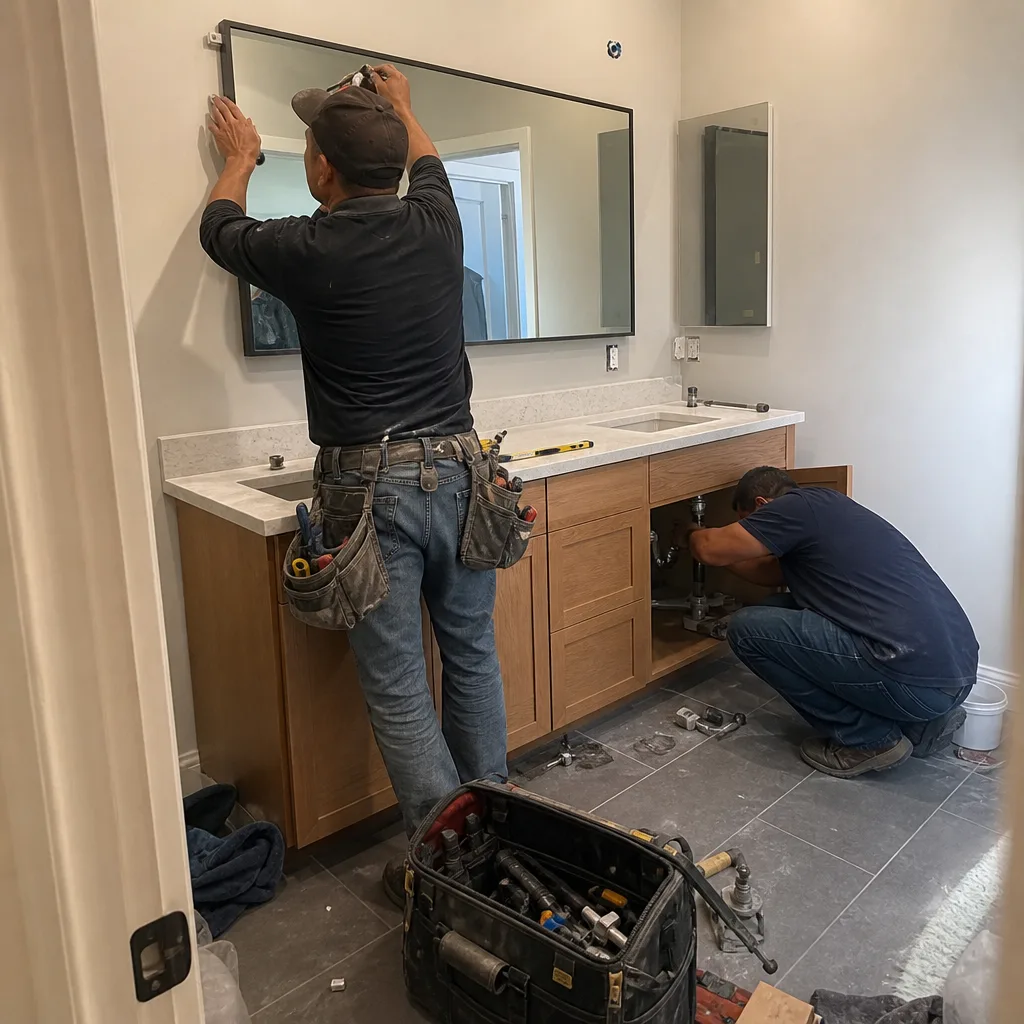
Walnut Creek’s summer heat cycles cause more thermal expansion in kitchen materials than coastal Bay Area kitchens experience. Temperatures regularly exceed 90°F in July and August, and kitchen windows, especially west-facing, amplify solar gain. Caulk joints absorb this movement; when they fail, water penetrates to substrate and causes damage that is expensive to repair.
Annual inspection points:
- Sink to countertop: the caulk bead at the sink rim prevents water from running under the countertop. Check for gaps, shrinkage, or mold. Silicone caulk lasts 5 to 10 years; acrylic latex lasts 2 to 5 years. We specify 100% silicone on all Kitchen Remodeling in Walnut Creek projects for this reason.
- Backsplash to countertop: this joint moves as the countertop expands and contracts. A gap here allows water and food debris behind the backsplash, leading to substrate swelling and tile delamination. Check in spring, after the thermal cycle has stressed the joint through winter contraction and summer expansion.
- Window to backsplash or side wall: the window frame moves independently of the wall. Caulk failure at this joint is common and often invisible behind window treatments. Pull back curtains or blinds and inspect the full perimeter.
- Cabinet to wall at end panels: scribe filler strips are caulked to the wall; movement cracks this caulk and creates a path for grease vapor and moisture into the cabinet void.
Re-caulking procedure: remove old caulk with a plastic scraper or specialized caulk remover tool; metal damages adjacent surfaces. Clean with isopropyl alcohol and let dry. Apply painter’s tape to both sides of the joint for a clean line. Cut the caulk tube nozzle at 45 degrees to match joint width. Tool with a wet finger or rounded sponge for concave profile. Remove tape immediately. Allow 24 hours cure before water exposure.
We leave clients with the exact caulk color and product specification in their project documentation. Color-matched caulks are available from countertop manufacturers (Silestone, Caesarstone, Cambria) for invisible joints. Generic white or clear caulk on a colored countertop is a detail that cheapens the whole installation.
Documentation System: Photos, Materials Log, and Future Repair Matching
Every Kitchen Remodeling in Walnut Creek project we complete includes a documented photo record as standard, not as an upgrade. The customer receives evidence of what was found and what was done. But the contractor’s record is not the homeowner’s record, and future repairs, touchups, or partial remodels require information that contractors rarely leave behind.
Build your own kitchen file within 30 days of project completion:
- Photograph every surface before first use. Take photos in daylight, with a color reference card or white sheet of paper in frame for white balance. Capture countertop full length, backsplash full field, cabinet fronts with hardware, and floor at cabinet toe-kick. These are your baseline condition records for warranty claims and insurance.
- Record the exact product names and lot numbers. Countertop: brand, color name, slab number, fabricator. Cabinets: manufacturer, door style, finish code, wood species. Tile: manufacturer, series, color, lot number, grout product and color. Fixtures: manufacturer, model number, finish code. Appliances: model and serial numbers. Paint: brand, sheen, color formula.
- Retain spare materials. Keep two full tiles, a 12-inch countertop remnant, and a cabinet door or drawer front in climate-controlled storage. These allow exact matching for repairs; manufacturers discontinue colors, and stone varies by quarry lot. The spare door front is also your test piece for any future cleaner or refinishing product.
- Store digital and physical copies. Cloud storage fails; hard drives fail; paper fades. Maintain two formats. Email yourself a copy as additional backup.
This documentation saves hundreds of dollars on touchup work. A countertop repair that requires a whole-slab color match because the original lot number is unknown costs $2,000 to $4,000. A repair with the lot number and a remnant for verification costs $300 to $600. The difference is the 30 minutes spent documenting at project end.
Under The Haven Standard, we provide written project documentation including material specifications and photo record. We encourage clients to augment this with their own photographs and notes, and we will verify any item in our files on request.
Annual Maintenance Schedule: What to Do and When
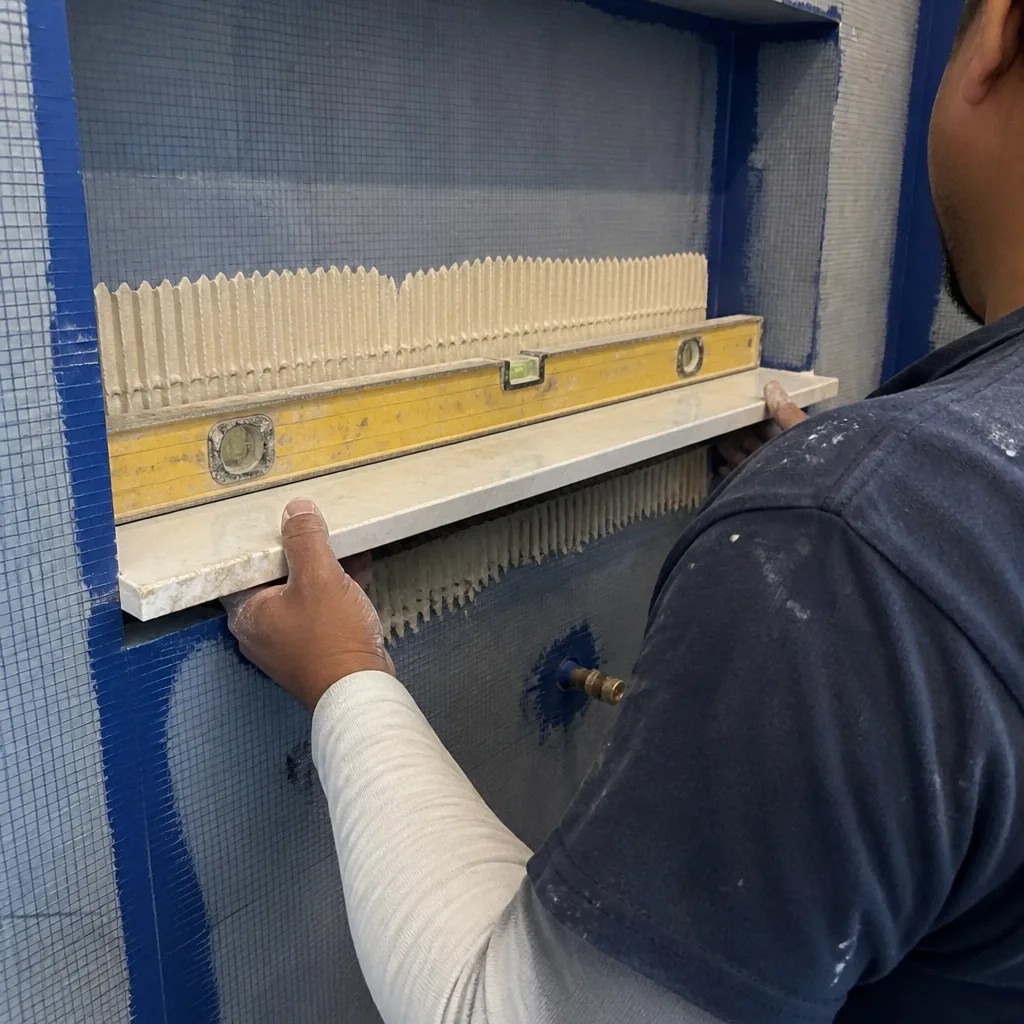
This schedule consolidates the material-specific guidance above into a calendar framework. The month is less important than the interval; choose months that match your household rhythm.
Spring (March-April):
- Inspect all caulk joints after thermal expansion season; re-caulk as needed
- Check cabinet hinge adjustment screws; tighten or adjust
- Clean range hood baffle or mesh filters
- Test natural stone countertops for water absorption; reseal if darkening occurs in under 10 minutes
Summer (July-August):
- Deep clean backsplash with material-appropriate cleaner
- Remove and soak faucet aerators in vinegar
- Inspect cabinet finish for UV fading; adjust window treatments
- Run ice through garbage disposal
Fall (October-November):
- Seal cement grout if needed
- Check pull-out spray hose weight position
- Inspect under-sink for leaks or moisture
- Drain and refill instant hot water dispenser tank
Winter (January):
- Review and update kitchen documentation file
- Schedule professional duct cleaning if interval has elapsed
- Replace charcoal filters on recirculating hoods
- Check hardware screw tightness
Common Mistakes to Avoid
- Using vinegar on epoxy grout. The acid degrades the resin binder. In Walnut Creek, where epoxy grout is common in higher-end remodels, this mistake halves grout life. Use pH-neutral cleaners only.
- Sealing quartz countertops. Engineered quartz does not absorb; sealer sits on the surface and creates a hazy film that requires professional polishing to remove.
- Over-tightening Blum hinge adjustment screws. One-quarter turn maximum before testing. Stripped hinge cups require door replacement or dowel-and-glue repair.
- Ignoring CFM-rated hood maintenance. A 1200 CFM pro hood with clogged baffles moves less air than a 300 CFM builder-grade unit. Filter cleaning frequency must scale with CFM.
- Using generic caulk for color-matched joints. White silicone on a gray quartz countertop creates a visual interruption that reads as sloppy workmanship. Manufacturer-matched caulks exist for this reason.
- Failing to document lot numbers. When Silestone discontinues “Cemento” or Caesarstone changes the “Calacatta Nuvo” formulation, the homeowner with a lot number can verify match; the homeowner without one buys a whole new countertop.
- Cleaning oil-rubbed bronze with ammonia. The lacquer topcoat strips, exposing the base metal to oxidation. The finish is then unrecoverable; replacement is the only remedy.
When to Call a Professional
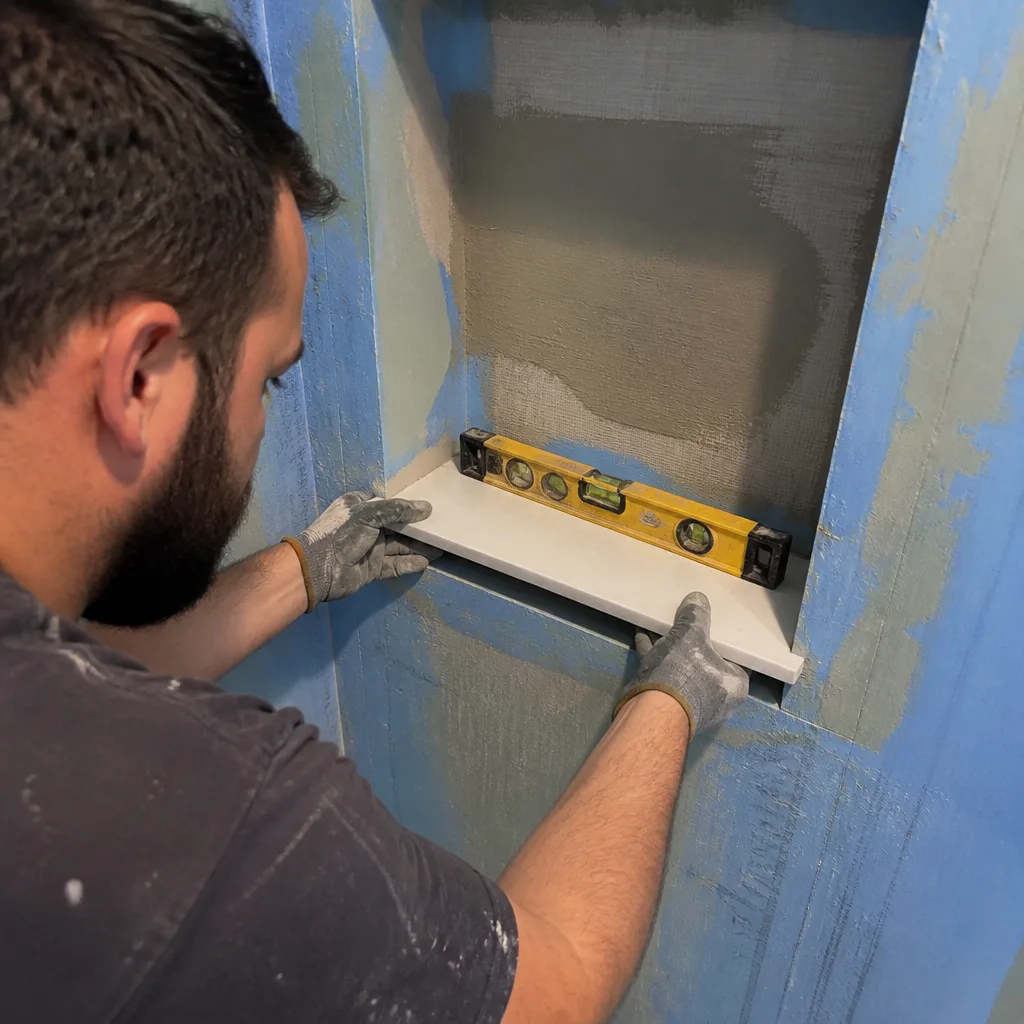
Some maintenance tasks require tools or expertise beyond typical homeowner capacity. Call a professional if you find water staining under the sink that indicates a leak at the supply or drain connection; if cabinet doors warp despite hinge adjustment, suggesting moisture intrusion or structural failure; if your range hood duct shows grease accumulation visible from the exterior vent; or if natural stone etching or cracking exceeds what sealing can address. Documented photo records help any professional diagnose issues faster and quote accurately.
Rowan Construction Group Walnut Creek offers free estimates in Walnut Creek. Call (510) 686-6370 to schedule a review of your kitchen’s condition, or bring any competitor’s written estimate for a free second opinion line by line. Our 365-Day Done Right Promise applies to all work, and every project receives a written price before any work starts, every time.
Frequently Asked Questions
Natural stone countertops in Walnut Creek should be sealed every 6 to 12 months for marble, every 12 months for granite, and never for engineered quartz. Test by dripping water on the surface; if it darkens the stone in under 10 minutes, reseal immediately regardless of schedule. Call (510) 686-6370 for an exact assessment of your stone type and condition - estimates are free.
No. Quartz tolerates mild abrasives and alkaline cleaners that will etch marble permanently. Marble requires pH-neutral cleaners and immediate wipe-up of acidic spills. The safest default for mixed kitchens is a pH-neutral stone cleaner used on all surfaces, avoiding the risk of grabbing the wrong bottle.
Professional duct cleaning for residential range hoods in the Walnut Creek market typically costs $300 to $600, depending on duct length, elbow count, and accessibility. Hoods over 600 CFM or with horizontal duct runs require more frequent cleaning, every 2 to 3 years. Call (510) 686-6370 for a written quote based on your specific duct configuration.
At Rowan Construction Group Walnut Creek, no work proceeds on a change until the change order is signed. The administrative discipline Haven acquired Rowan for, and the reason projects finish within a few percent of the agreed cost across 4,000-plus jobs. Your written quote is a flat price with a written scope; if we find additional issues during inspection, we document them with photos and provide a revised written quote before any additional work begins.
Gas cooktops need 100 CFM per 10,000 BTU of total burner output; electric and induction need minimum 250 CFM, 400 CFM preferred for heavy cooking. A 36-inch pro-style gas range with six burners totaling 90,000 BTU needs 900 CFM minimum. If your hood is undersized, you will notice persistent cooking odors, grease film on cabinets, and moisture condensation on windows. We verify CFM sizing during every Kitchen Remodeling in Walnut Creek project and document the calculation in your project file.
Yes. Kitchen remodeling that involves electrical, plumbing, or structural modifications requires permits from the City of Walnut Creek Building Division. We pull all required permits, schedule inspections, and ensure passing grades before final payment. The permit record is part of your project documentation and protects resale value; unpermitted work must be disclosed and may require retroactive permitting at greater cost.
The Bottom Line

A kitchen remodel is a significant investment, and its lifespan depends on maintenance matched to the materials installed. Engineered quartz needs soap and water, not sealer. Epoxy grout needs pH-neutral cleaners, not vinegar. Cabinet hinges need annual adjustment, not replacement after warp. Range hoods need filter maintenance scaled to CFM rating, not a generic “clean sometimes.” Caulk needs spring inspection after thermal expansion, not crisis response after water damage. And documentation, the step most contractors skip, saves hundreds to thousands on future repairs by enabling exact material matching. Organize your maintenance by material, not by month, and your kitchen will look and function as intended for decades.
Written by Grant Rowan, Owner at Rowan Construction Group Walnut Creek, serving Walnut Creek since 2007.