
Free written scope consultation - allowances, timeline, and change-order rules on paper before a single trade is scheduled
 Before
 After
After Before
 After
After Before
 After
AfterHow Much Does Paver Patio Installation Cost in Walnut Creek?
Paver patio installation in Walnut Creek, CA typically costs between $3,500 and $11,000 for a standard residential project, with most homeowners landing somewhere in the $5,000 to $7,500 range depending on patio size, paver type, and site conditions. A simple 200-square-foot concrete paver patio on flat ground sits toward the low end; a 400-square-foot natural stone or travertine installation with steps, a border pattern, and polymeric sand joints pushes toward the upper end. We deliver a written flat price before any work starts, so the number on the page is the number you can compare.
Paver Patio Installation Cost Breakdown (2026)
The ranges below reflect the Walnut Creek market as of 2026, including labor, base preparation, materials, and cleanup. They do not include optional lighting, drainage systems, or permit fees where required by the City of Walnut Creek.
| Project Type / Scope | Typical Cost Range | What’s Included |
|---|---|---|
| Small patio (100-150 sq ft), concrete pavers | $3,500 - $5,200 | Excavation, compacted gravel base, bedding sand, standard concrete pavers, edge restraints |
| Mid-size patio (200-300 sq ft), concrete pavers | $5,200 - $7,500 | Same base prep, Belgard or Techo-Bloc concrete pavers, polymeric sand joints, cleanup |
| Mid-size patio (200-300 sq ft), travertine or bluestone | $6,500 - $9,000 | Natural stone material premium, mortar-set or sand-set depending on site, sealed finish |
| Large patio (350-500 sq ft), concrete pavers | $7,000 - $10,000 | Extended excavation, thicker base for load, full Belgard or Techo-Bloc install, border course |
| Large patio with steps, pattern detail, or level change | $8,500 - $11,000 | Step construction, pattern-cut labor, additional base material for grade transitions |
| Permeable paver system (stormwater drainage requirement) | $6,000 - $11,000+ | Open-graded aggregate base, permeable pavers, higher material cost - increasingly relevant in Contra Costa County |
What Pushes the Number Up or Down
Labor accounts for roughly 40 to 50 percent of the total in Walnut Creek and the broader Contra Costa County market. The trades here pay a higher prevailing wage than the Central Valley, and experienced crews who actually pull permits and compact to spec cost more per hour than day-labor alternatives. When you see a quote that’s $2,000 lower than everyone else, it’s usually the base preparation that’s been cut. A poorly compacted subbase settles, and settled pavers shift, heave, and pool water within two to three rainy seasons.
Material cost is the second biggest lever. Belgard’s Mega Arbel or Techo-Bloc’s Blu 80mm run $4 to $6 per square foot at the material level. Travertine or natural bluestone can run $8 to $14 per square foot before a single pound of gravel goes in the ground. We source from both Belgard and Techo-Bloc, which gives us honest numbers on the quote rather than marked-up distributor pricing.
Site conditions in Walnut Creek add cost more often than people expect. Homes in the Northgate, Lakewood, and Larkey Park neighborhoods sometimes sit on clay-heavy soil that requires deeper excavation and a thicker aggregate base to prevent frost heave and seasonal movement. The dry-summer, wet-winter Mediterranean climate here puts pavers through real seasonal stress, and skipping the correct base depth to save $400 in material is a decision that shows up as cracked or rocking pavers within a few years.
What Affects Paver Patio Installation Pricing in Walnut Creek
- Patio size and shape: Larger square footage reduces cost per square foot slightly due to material efficiency, but irregular shapes, curves, and custom cuts add significant labor. A freeform patio that mirrors an existing landscaping bed takes two to three times the cutting labor of a simple rectangle.
- Paver material and grade: Standard concrete pavers are the most cost-efficient. Concrete pavers from Belgard or Techo-Bloc, both brands we stock and specify regularly, offer consistent sizing and good density ratings for Walnut Creek’s climate. Natural stone – travertine, bluestone, slate – carries a material premium of $3 to $8 per square foot over concrete.
- Site slope and grading: Walnut Creek’s hillside neighborhoods, particularly areas near Walnut Creek Open Space and the foothills above the Rossmoor corridor, often require significant regrading before a base can be built. Even a modest 6-inch grade change across a 300-square-foot patio adds excavation time and may require a retaining edge or step.
- Base depth and soil conditions: The standard base in this market is 4 to 6 inches of compacted Class II aggregate. Clay-heavy soils common in parts of Walnut Creek may require 6 to 8 inches, plus a layer of geotextile fabric to separate the base from the native soil. This adds $200 to $600 to a typical project but extends paver life by years.
- Drainage requirements: Contra Costa County has increasingly strict rules on impervious surface and stormwater runoff for projects over a certain square footage. A permeable paver system – where joints and the aggregate base allow water to pass through rather than sheet off – costs more upfront but can satisfy county drainage requirements without a separate drain installation. We clarify permit status and drainage obligations in writing before the quote is finalized.
- Demolition and removal: If there’s an existing concrete patio, wood deck footings, or old brick paving to remove, demolition adds $500 to $2,000 depending on thickness and access. Concrete saw-cutting in a tight backyard with no equipment access raises that number.
- Steps, borders, and pattern complexity: A simple running-bond pattern with a matching border is straightforward. A herringbone or basket-weave pattern requires more cuts per square foot. Integrated steps, raised platforms, or curved edges each add labor hours that show up clearly in an honest line-item quote.
 Before
 After
AfterPaver Patio vs. Other Outdoor Surface Options in Walnut Creek
Walnut Creek homeowners sometimes compare paver patios against poured concrete or stamped concrete before making a decision. Here’s how the numbers look side by side for a comparable 250-square-foot project in this market:
- Paver patio (concrete pavers): $5,200 - $7,500 – individual units can be lifted and reset if a pipe needs access or a section settles; surface repairs don’t require repouring the whole slab.
- Stamped concrete: $4,000 - $7,000 – lower initial cost in some cases, but cracks propagate across the full slab and surface resealing is needed every two to four years in Walnut Creek’s sun-heavy summers.
- Natural stone (travertine, bluestone): $6,500 - $9,500 – highest material cost, excellent visual result, requires sealing in porous varieties to handle Walnut Creek’s wet winters without staining.
- Poured concrete (plain): $3,500 - $5,500 – lowest cost, functional, but limited design flexibility and full replacement required for significant damage.
Most homeowners in Walnut Creek who plan to stay in the house for five or more years find that concrete pavers from a manufacturer like Belgard or Techo-Bloc offer the best balance of cost, durability, and repairability. If you’re closer to selling, a stamped concrete or plain concrete slab may pencil out better on a pure return-on-cost basis.
Permits and Local Requirements for Paver Patios in Walnut Creek
Most ground-level paver patios in Walnut Creek do not require a building permit from the City of Walnut Creek Community Development Department, as long as the patio is at grade and not attached to the house structure. However, there are two areas where permit questions commonly come up:
- Impervious surface limits: If your lot already has significant paved area – driveway, existing patio, walkways – adding a new patio may push your total impervious coverage above Contra Costa County’s stormwater thresholds. Projects that cross those thresholds may require a drainage plan or a permeable paver specification to comply.
- Structural connections: If the patio includes a covered structure, columns, or direct attachment to the home’s foundation, a building permit is required. A freestanding patio with no roof or structure is typically permit-exempt.
We clarify permit status before the written quote goes out, so there are no surprises after the work begins. Under the Haven Standard, no work proceeds until scope and price are agreed in writing, which includes noting any permit requirements and who is responsible for pulling them.
How to Save on Paver Patio Installation in Walnut Creek
There are a few places where the cost of a paver patio project is genuinely flexible, and a few where cutting corners costs more in year three than you saved in year one.
Where flexibility is real
Material selection is the most honest savings lever. Choosing a Belgard Holland Stone or Techo-Bloc Brita in a standard size and color costs meaningfully less per square foot than a large-format tile-pattern paver or a custom color. The structural result is identical; the aesthetic difference is real but not always significant. If you’re open to a standard color and profile, we can show you the delta in dollars on a line-item quote.
Keeping the shape rectangular or L-shaped rather than curved reduces cut labor by a noticeable amount on a 300-square-foot project. A curve is a design choice that adds cost at every step: material waste, cutting time, and edge restraint fitting. If the curve isn’t load-bearing for the design, a straight edge with a planted border achieves a similar visual break for less.
Combining work is another practical option. If you’re also planning a Paver Patio Installation in Walnut Creek alongside a driveway reseal or a short fence section, a single mobilization covers multiple scopes. Walnut Creek projects where we do two trades in one trip consistently price better per square foot than two separate visits.
Where savings get expensive later
Base preparation is not where to cut. A 4-inch compacted aggregate base is a minimum standard, not a generous spec. Quotes that don’t specify base depth, compaction method, or edge restraint type are leaving cost somewhere, and the most likely place is under the surface. Pavers that shift in year two are a full reinstall, not a patch job.
Polymeric sand, not regular jointing sand, should be specified. In Walnut Creek’s climate, regular sand washes out of joints in the first wet winter and allows weed germination. Polymeric sand costs a few hundred dollars more on a standard patio and eliminates most of that recurring maintenance issue for five to ten years.
To get a written flat price before any work starts, call us at (510) 686-6370. Estimates are free, and if you have a competitor’s quote, we’ll review it line by line under our Free Second Opinion offer at no charge.
What to Expect From a Rowan Construction Group Paver Patio Installation
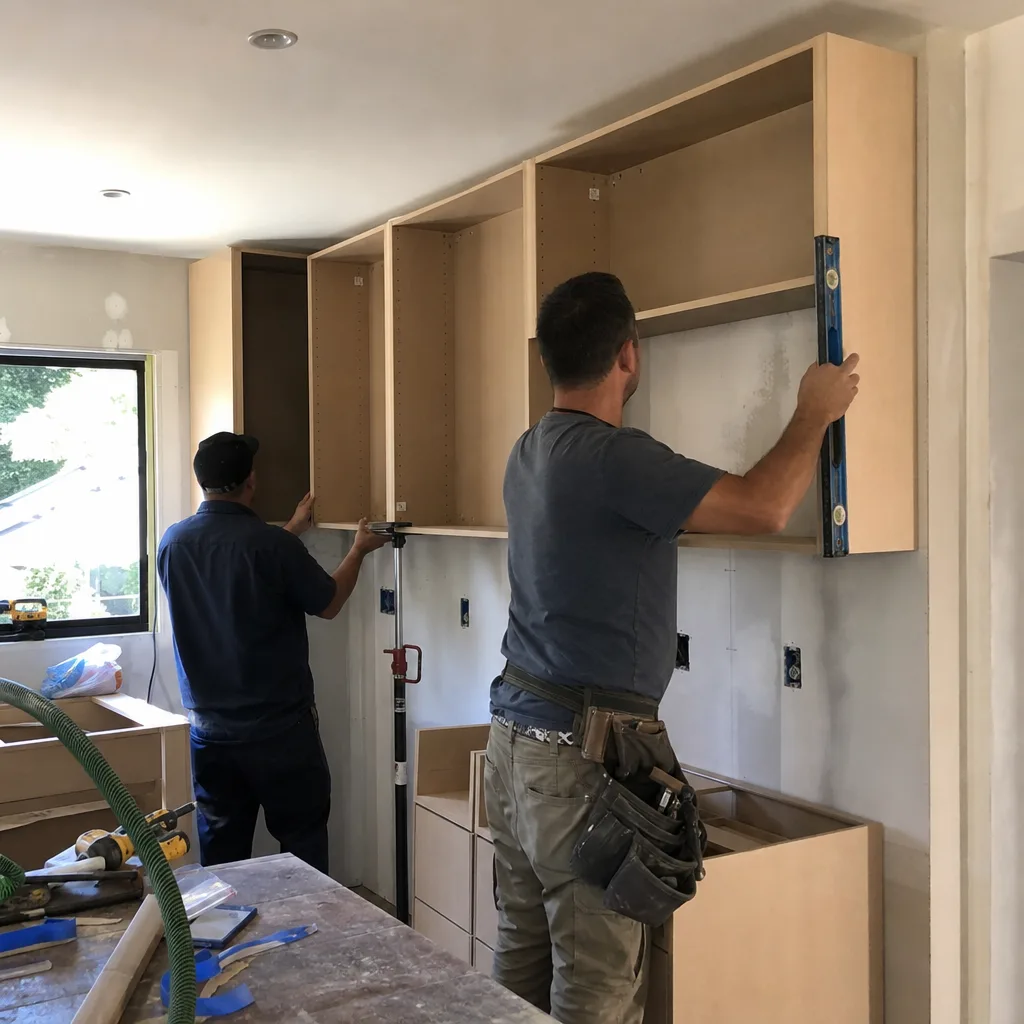
Grant Rowan built Rowan Construction Group on one operating principle: the price is written before anyone picks up a tool. Across 4,000-plus projects since 2007, that discipline has kept final costs within a few percent of the agreed number, across all seven trades we do, including driveway and paver work.
Here’s what the process looks like for a paver patio project in Walnut Creek:
- Site visit and written quote: A crew member visits the site, measures the area, notes soil conditions, assesses slope, and confirms drainage requirements. You receive a written flat price with a defined scope – material brand, paver size and color, base depth, joint type, edge restraint specification. No “call for a quote” – the number is on paper before we leave.
- Signed scope and change-order policy: Work starts when you sign. Under the Haven Standard, no change to scope or price happens without a signed change order. If we open the ground and find a buried irrigation line or unexpectedly soft soil, we document it, write a change order, and get your signature before adding any cost. That administrative discipline is not a promise; it’s a clause.
- Installation: Background-checked, uniformed crew performs excavation, base compaction, bedding sand screeding, paver installation, edge restraint fastening, and polymeric sand jointing. For Walnut Creek clay-soil sites, we confirm compaction before the sand layer goes down.
- Documented photo record: Every visit, every stage, every crew – documented in photos and delivered to you. You have a record of what’s under the pavers, not just what’s on top.
- 365-Day Done Right Promise: If something isn’t right within a year of completion, we make it right. The promise is printed on every project document and backed by the Haven Standard, not a verbal assurance.
Every crew member is background-checked before they arrive. A live person answers calls 24/7, not a voicemail queue. And the written warranty is part of the deliverable package, not a follow-up email someone might send eventually.
Paver Patio Installation Cost by Neighborhood in Walnut Creek
Walnut Creek’s neighborhoods vary in ways that affect paver patio pricing in specific, predictable ways. Here’s what we see regularly:
- Northgate and Lakewood: Established neighborhoods with mature trees and irrigation systems in many yards. Underground irrigation line conflicts add complexity to excavation. We flag these in the quote rather than discovering them mid-dig.
- Saranap (unincorporated): Contra Costa County jurisdiction rather than City of Walnut Creek in some cases, which can affect which permit office handles a project. We clarify jurisdiction at the quote stage.
- Rudgear Estates and Ygnacio Valley Road corridor: Larger lot sizes, more frequent requests for large-format patios in the 400-plus square foot range, and higher incidence of significant slope. Level-change step construction is common here.
- Larkey Park and Civic Park neighborhoods: Dense lot coverage means less equipment access for excavation. Manual base compaction rather than plate-compactor compaction sometimes required in tight backyards; labor cost reflects that difference.
- Downtown Walnut Creek adjacent (Creekside area): Occasional proximity to Walnut Creek’s riparian setback zones. Projects within a certain distance of the creek corridor may face additional review. We identify setback issues before the quote is finalized.
FAQs: Paver Patio Installation Cost in Walnut Creek
How much does a paver patio cost in Walnut Creek, CA in 2026?
A paver patio in Walnut Creek costs between $3,500 and $11,000 for most residential projects in 2026. A small 150-square-foot concrete paver patio on flat ground typically runs $3,500 to $5,200. A 300 to 400-square-foot installation with natural stone, pattern detail, or grade changes runs $7,000 to $11,000. The single biggest variable in the Walnut Creek market is base preparation cost, which depends on soil type and site slope. Call (510) 686-6370 for a written flat price – estimates are free.
Is it cheaper to install a paver patio or pour a concrete slab in Walnut Creek?
For a comparable 250-square-foot project in Walnut Creek, poured concrete typically runs $3,500 to $5,500 and paver installation runs $5,200 to $7,500, so concrete is cheaper upfront by roughly $1,000 to $2,500. However, paver patios allow individual unit replacement if a section settles or needs access underneath; a cracked concrete slab typically requires section saw-cutting and repour. Over a ten-year window in Walnut Creek’s clay-soil conditions, many homeowners find the repairability of pavers offsets the higher initial cost. Call (510) 686-6370 and we’ll put both options on a written quote side by side.
Do I need a permit for a paver patio in Walnut Creek, CA?
Most ground-level paver patios in Walnut Creek do not require a City of Walnut Creek building permit, provided the patio is at grade and not structurally attached to the home. Projects that add a covered structure, exceed certain impervious surface thresholds under Contra Costa County stormwater rules, or fall within a creek setback zone may require review. We confirm permit status before the written quote is issued, so there are no surprises once work starts.
How long does paver patio installation take in Walnut Creek?
A standard 200 to 300-square-foot paver patio installation in Walnut Creek typically takes two to four days from excavation to final sand setting. Large patios with steps, significant grade work, or natural stone can run four to six days. The timeline in the written quote includes base curing time before foot traffic, which we specify by project type so you know exactly when the patio is fully ready. Scheduling lead times vary by season; call (510) 686-6370 to get on the calendar.
What’s the best paver brand for a Walnut Creek patio?
Belgard and Techo-Bloc are the two brands we specify most often for Walnut Creek paver patios, and both perform well in the local climate – dry summers with high UV exposure and wet winters with occasional frost at higher elevations. Belgard’s Mega Arbel and Techo-Bloc’s Blu 80mm are both high-density concrete pavers that resist the seasonal moisture cycling well. For natural stone, sealed travertine is a common choice in Walnut Creek backyards where aesthetics are the priority; it requires a compatible sealant application every three to five years in this climate. We specify brand, product line, size, and color on the written quote so there’s no ambiguity at the material stage.
Can I get a second opinion on a paver patio quote I already received?
Yes. Rowan Construction Group offers a Free Second Opinion on any written estimate. Bring a competitor’s quote and Grant Rowan or a member of our team will review it line by line at no charge – checking base depth specification, material grade, edge restraint type, and joint sand specification against what the price implies. A quote that omits base depth or compaction method is omitting cost somewhere; we’ll show you where. Call (510) 686-6370 to schedule the review.
Key Takeaways
- Paver patio installation in Walnut Creek costs $3,500 to $11,000 in 2026, with most projects in the $5,000 to $7,500 range.
- Base preparation – excavation depth, aggregate compaction, soil type – is the most important cost variable, and also the one most likely to be understated in a low quote.
- Belgard and Techo-Bloc concrete pavers are the most cost-effective durable option for Walnut Creek’s climate; natural stone adds $3 to $8 per square foot in material cost.
- Most ground-level patios don’t require a City of Walnut Creek permit, but impervious surface thresholds and creek setbacks can trigger review; confirm before you commit.
- Rowan Construction Group delivers a written flat price before any work starts, a signed change-order process for any scope change, a documented photo record, and the 365-Day Done Right Promise on every project.
- The Free Second Opinion offer means you can bring any competitor’s written quote and we’ll review it at no charge – line by line.
Get a Written Paver Patio Estimate in Walnut Creek
If you’re pricing a paver patio project in Walnut Creek and want a number you can actually compare, call Rowan Construction Group at (510) 686-6370. We’ll schedule a site visit, measure the area, assess your soil and drainage conditions, and deliver a written flat-price quote with a full material specification – paver brand, base depth, joint type, edge restraint – before any work starts.
That’s not a process step. Under Clause 1 of the Haven Standard, the written price before work starts is the founding promise of how we build. The 365-Day Done Right Promise covers the result. And if you’ve already received a competitor’s quote, our Free Second Opinion review costs you nothing.
For a free estimate on your Walnut Creek paver patio, call (510) 686-6370. You can also explore our full range of residential construction work at the home page, where every trade we cover carries the same written-price standard.
Written by Grant Rowan, Owner at Rowan Construction Group, serving Walnut Creek since 2007.
Pricing reflects the Walnut Creek market as of 2026. Rowan Construction Group Walnut Creek offers free estimates – call (510) 686-6370.
What Our Customers Say
"They found an old septic line under the driveway run and stopped, documented it, and re-quoted before continuing."
- Xavier L."Fence and retaining wall along a sloped boundary. They photographed the footing depth at each post, which mattered when the county inspector came."
- Iona F."Talked us out of the larger scope we came in asking for, because it would not have added the value we thought."
- Emil R.